

LUMS Faculty Win Google Society-Centered AI Award to Let Communities Decide How AI is Judged



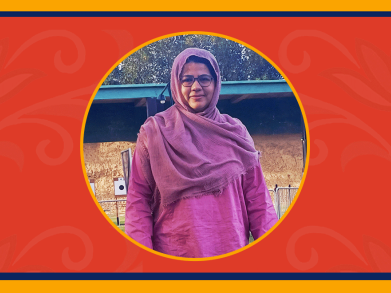
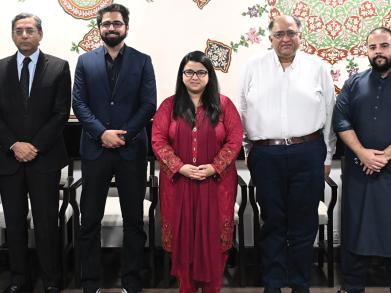
Dr. Maryam Mustafa, Associate Professor of Computer Science, and Dr. Farah Nadeem, Assistant Professor at the Syed Ahsan Ali and Syed Maratib Ali School of Education (SOE), have won a Google Society-Centered AI research award for their project "Beyond Western Defaults: A Socio-Technical Infrastructure for Community-Governed AI Alignment in Low-Resource Contexts".
AI systems are now used for health advice and education around the world, but they are still tested against Western language and Western norms. A system can pass every benchmark and still misread how a woman in Pakistan describes a symptom, or give advice that assumes she makes health decisions alone. The communities AI serves worst have the least say in how it is judged.
This project looks to change who does the judging. Women health workers, teachers, patients and adolescent girls will evaluate AI systems against criteria they set themselves. The work runs across two deployments: Awaaz-e-Sehat, a voice-based AI platform for maternal health developed at LUMS, and a new speech-based app teaching literacy and numeracy in Urdu and Pashto to out-of-school girls.
About the Researchers
Dr. Mustafa is Director and Principal Investigator of two Gates Foundation-funded centres. The first is Pakistan's National AI Hub for Maternal, Newborn and Child Health, a LUMS–Aga Khan University partnership that builds and scales AI tools for maternal and child health and advises governments on AI adoption and policy. The second is the Global Edge AI Lab at LUMS, which works building and testing use cases in Health and Education on low-cost devices in the absence of internet connectivity.
She is the founder of Awaaz-e-Sehat, a speech-first AI platform for maternal health through which women build and carry their own antenatal record over WhatsApp in Urdu.
Dr. Nadeem is an Assistant Professor at the Syed Ahsan Ali and Syed Maratib Ali School of Education (SOE) at LUMS and Co-Director of SOE's Assessment, Insight and Measurement Collective (AIMC). Her work connects machine learning with education policy. She leads FCDO-funded research on assessment data use and responsible AI integration in Pakistan's education system. Before joining SOE, she led monitoring and evaluation at Punjab's PMIU, where she oversaw data systems covering 52,000 schools. She has also worked with UNICEF Pakistan and the World Bank. She holds a PhD in Electrical and Computer Engineering from the University of Washington, where she was a Fulbright Scholar.